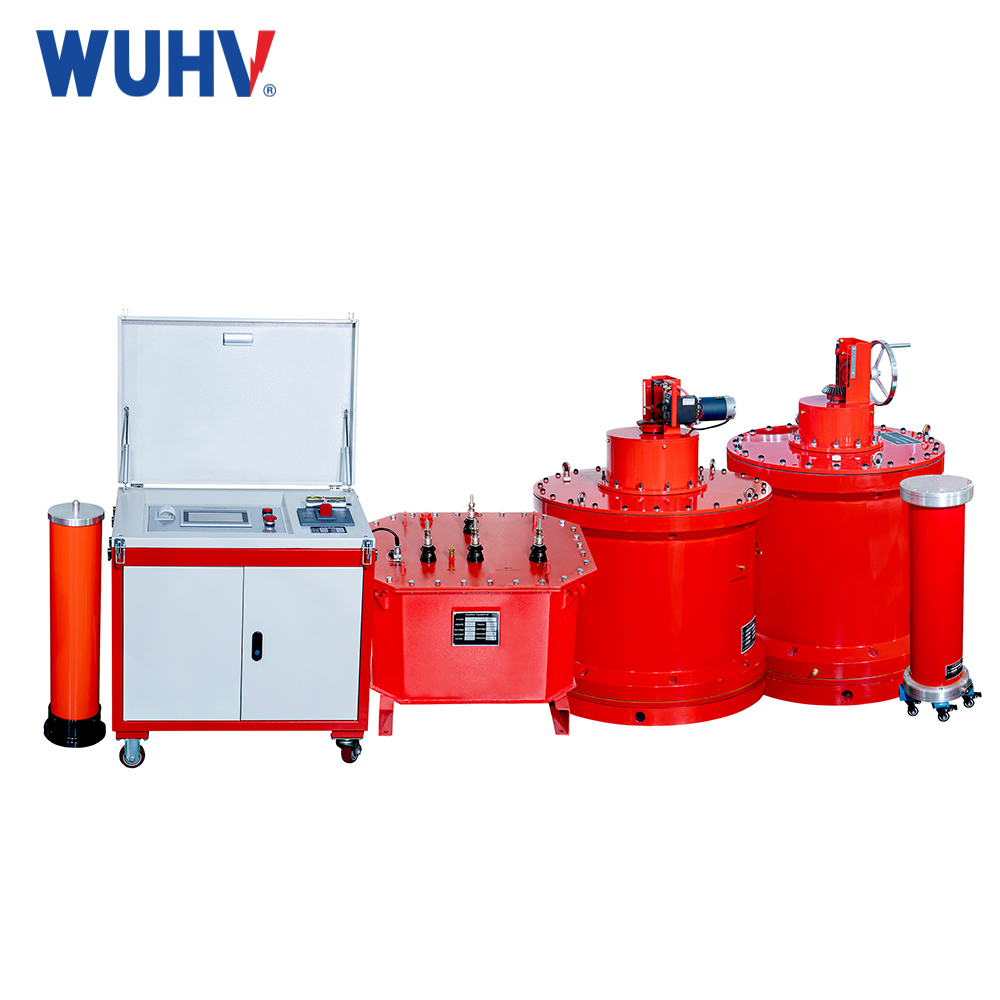
Hi, everyone in the power industry! Today, let's talk about a guy that sounds a bit grounded but is crucial - the AC grounding resistance tester. You may ask, isn't it just measuring resistance? What's so difficult about it? Don't underestimate it, in the power system, the accuracy of this "ground" measurement directly affects the safe operation of equipment and personal safety!
What is AC grounding resistance? Why test?
Simply put, AC grounding resistance refers to the resistance of AC signal transmission between a certain point in the power system (such as equipment casing, grounding device) and the earth. This resistance value is not the smaller the better, nor is it the larger the better. It has an optimal range.
Too low resistance: It may indicate corrosion of the grounding body, loose connection, and reduced effectiveness of grounding protection. Once leakage occurs, the risk can be high.
Excessive resistance: This indicates that the grounding system may have poor contact and high soil resistivity, which can also affect the sensitivity and reliability of grounding protection.
So, regularly and accurately measuring this resistance is like doing a "health check" on electrical equipment to ensure that they are always in the best safe condition.
What are the "behind the scenes" factors that affect grounding resistance?
To accurately measure the grounding resistance, it is necessary to understand the "behind the scenes" who affect it:
Soil resistivity: This is the most important factor! The moisture, composition, and temperature of soil can all affect its conductivity.
Grounding body: The material, burial depth, shape, quantity, and contact area with the soil of the grounding body directly affect the resistance value.
Grounding lead: The length, cross-sectional area, and firmness of the connection of the lead can also bring additional resistance.
Surrounding environment: seasonal changes, amount of rainfall, and even the presence of other metal objects on the surface can all have an impact.
Do you want precise measurement? These "artifacts" will lend you a helping hand!
At Wuhan UHV Power Technology Co., Ltd., we specialize in the research and production of various professional power testing instruments, including the high-performance AC grounding resistance tester. These instruments, with their high precision, strong anti-interference ability, and ease of operation, have become powerful assistants in the hands of power engineers.
Working principle: They usually use the AC voltage drop method to measure, by applying an AC signal, measuring voltage and current, and then calculating the grounding resistance.
Key features:
High precision measurement: capable of accurate measurement to the milliohm level.
Strong anti-interference ability: able to work stably even in complex electromagnetic environments.
Easy to operate: Humanized design, intuitive and easy to read data.
Wide applicability: can be used for grounding systems of different types and scales.
How can we do better? A few tips!
To measure the AC grounding resistance more beautifully, you may want to try these:
Choose appropriate testing points: avoid metal components or interference sources that may affect the results.
Ensure good grounding: The grounding electrode of the tester must be firmly buried and in good contact.
Taking the average of multiple measurements: reduces accidental errors and improves the reliability of the results.
Pay attention to environmental factors: try to measure under stable weather and moderate soil moisture.
Regular maintenance of instruments: Ensure the accuracy and performance of the testing equipment.
Wuhan UHV Power Technology Co., Ltd. has always been committed to providing the most reliable testing solutions for the power industry. We firmly believe that through continuous technological innovation and strict control of product quality, we can help you better complete various testing tasks and ensure the safe and stable operation of the power system.
FAQ
Q1: What is the measurement range of the AC grounding resistance tester? A1: Different models of instruments have different measurement ranges, but generally can cover common grounding resistance values in power systems.
Q2: Why do the measured grounding resistance values sometimes differ? A2: This may be related to various factors such as soil moisture, temperature changes, as well as the selection of measurement points and instrument accuracy.
Q3: How to determine if the grounding resistance is qualified? A3: The qualification criteria need to be determined based on specific power safety regulations or industry standards, and generally have a clear range of values.
Q4: What safety precautions should be taken when using an AC grounding resistance tester? A4: During operation, follow the instructions for using the instrument, pay attention to personal safety, and avoid touching high-voltage equipment.
Q5: Will the instrument be affected when measuring in humid environments? A5: A humid environment can affect soil resistivity, which in turn affects measurement results. Attention should be paid during measurement.